

Introduction
As you think of having a knee replacement surgery, you would, by now, have asked yourself: Is knee replacement surgery safe? It is a valid and pertinent question. The silver lining is that the knee replacement surgery has been rated to be one of the most successful and safe orthopedic surgeries today. Millions of individuals worldwide have undergone a successful knee replacement surgery and lived pain-free and active lives. The following all-encompassing resource deals with your question concerning safety and is intended to help you understand why the answer is yes when posed as to whether the knee replacement surgery is a safe one, so long as it is done by old hands and with proper preparation.
Understanding Knee Replacement Surgery
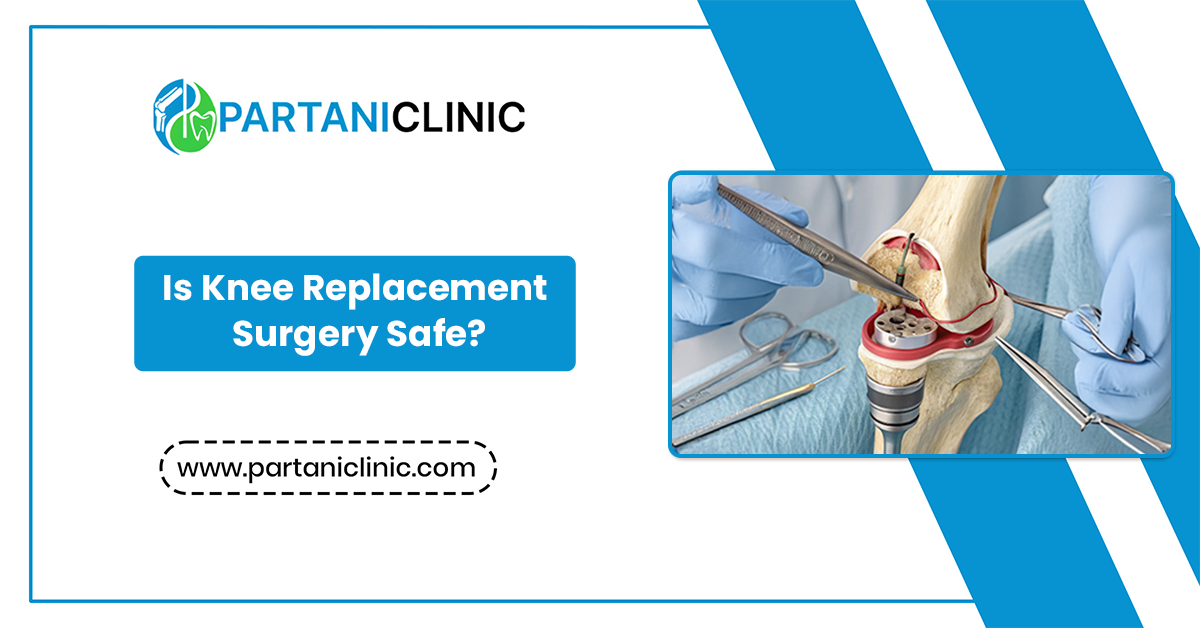
Before deciding on whether the operation of the knee replacement is safe or not, it is important to know what it is all about. During knee replacement, the surgeon will remove the worn-out part of your knee joint and replace it with high-quality material, e.g., metal, plastic, and ceramic. It is typically performed in a period ranging between one to 3 hours, and it can be carried out either with the traditional or with the contemporary methods of open and minimal invasive surgery. Knee replacement is a process that is carefully planned and is done using quality and accurate imaging tools, translating to a much safer process than in the past.
Modern Safety Standards Make Knee Replacement Surgery Safe
Advanced Surgical Technology
When asking the question, is knee replacement surgery safe, one should take into consideration that the use of advanced technology is the key to safety. The computer-assisted systems have also helped the surgeons to find the places of the implants in the real position they are in during surgery, thus providing the surgeons with the correct position. With 3D, surgeons are able to plan the surgery in detail prior to being in the operating room. Robotic-assisted surgery is gradually becoming more and more accessible, and the results of such a surgery are more accurate and predictable. Contributions such as these technological contributions would make a long way to the result or complication reduction of surgery as well as improving long-term outcome, and in that way; is knee replacement surgery safe is a question that will be gaining more and more weight.
Experienced Surgical Teams
Surgeon expertise is critical in knee replacement surgery because of its safety. Thousands of these procedures are carried out over the course of their careers: board-certified orthopedic surgeons specializing in knee replacement. The experienced surgeons know how to manage complications fast, make good decisions in unforeseen circumstances, and always produce excellent results. The choice of surgeon and his/her background experience has a direct influence on the safety of the procedure.
Rigorous Pre-Operative Evaluation
Before surgery, you will undergo a comprehensive check-up that will include blood tests, radiography, and a heart check-up. Such a thorough evaluation of the patient reveals any medical issues that can lead patients to greater risks during the operation, and it allows your surgical team to develop a particular approach to safety. In case of appropriate preparation and care, knee replacement is appropriate and safe in patients with diabetes, heart disease, and other conditions.
Infection Prevention Protocols
Infection is one of the main safety issues of any operation. The operating rooms of today are highly sterile, featuring special filter air environments, prophylactic antibiotics, and meticulous surgical practice. When guidelines are adhered to, the occurrence of hospital-acquired infection of the knee replacement is extremely low. To avoid being infected before, during, or after surgery, your surgical team undertakes great care in the advancement of precautions.
Success Rates Support Safety
Success rates can be a strong indicator of whether knee replacement surgery is safe or not. The success rate of contemporary knee replacement surgery is higher than 95, which means that most patients have a significant reduction in pain and better functioning. The majority of implants have durations of 15-20 years plus, and will only need revision once the implant becomes worn out after many years of usage. Such remarkable data illustrate the success and safety of contemporary knee replacement surgeries.
Potential Complications Are Rare
Although there is some risk involved in any surgery, it cannot cause serious complications with knee replacement. Small complications, such as temporary swelling or stiffness, arise in some patients, but those are usually resolved with the help of physical therapy. More serious complications, such as blood clots, infection, or implant failure, only happen in less than 2-3 percent of patients. The surgical team at your hospital has taken a lot of precautions to avert these complications, such as blood clot prevention techniques, antibiotic prophylaxis, and precise technique in surgery.
Return to Activity Recovery
Safety is evidenced by good recovery in the patients who get back to normal functioning. Within a few days following surgery, most individuals could walk with no help, and in a few weeks, they would be ready to resume some light activities. Most of the patients within three to six months regain their normal life, which includes exercises and other recreational activities. Such positive recovery rates among millions of patients all over the world provide the answer to the question of whether or not knee replacement surgery is safe.
There is No Age Limit on Safety
One of the many myths is that knee replacement surgery is unsafe when one is advanced in age. Even older adult patients can safely have their knees replaced using modern anesthesia methods and perioperative care. Several knee replacement surgeries in patients aged 80s and 90s have been successfully done with a good result. Your age should not be the reason why you should not think of this life-changing procedure.
Dr. Arun Partani: Best Orthopedic Surgeon in Jaipur
Dr. Arun Partani is the best doctor for Best Knee Replacement in Jaipur, who has specialized in knee replacement surgery as well as in joint reconstructions. Having a long-term experience of working in the sphere of surgery along with the broad training as a specialist in the field of using the advanced techniques of knee replacement, and having conducted a number of successful surgeries, which is enough to guarantee the professional qualification, Dr. Partani has proved himself to be a trusted specialist in the field of orthopedic surgery. His extensive focus on patient safety, coupled with his expertise in both conventional and minimally invasive surgical procedures, has made sure that whenever patients ask the question: is knee replacement surgery safe, they are assured not only with a principle belief but also with the result that he has created in his long history of remarkable results.
Conclusion
The question of whether a knee replacement surgery is a safe procedure is a resounding yes. One of the safest and most successful orthopedic surgeries practiced nowadays is modern knee replacement surgery; its success rate is over 95 percent, and serious complications are less than 3 percent, rarely. Knee replacement is a legitimate solution for knee pain and dysfunction thanks to advanced surgical technology, trained surgeons, stringent safety measures, and thorough preparation of the patients. When knee pains are chronic, restricting your life and your conservative therapy has not succeeded, knee replacement surgery provides a great chance to get back to the normal, pain-free activities.
FAQ
Can people with numerous health conditions undergo knee replacement surgery?
The answer is yes, knee replacement surgery is safe to perform on individuals having a diabetes, heart disease, and so on. Your surgeon will visit you in the pre-operation check-up and liaise with your other doctors to make sure that you are safely managed. Surgery can be safely performed on most patients, irrespective of their age or medical history, due to modern anesthesia and perioperative measures.
What are the most common complications from knee replacement surgery?
Other cases have minor complications such as temporary swelling, stiffness, and pain, which normally happen but resolve through physical therapy. In less than 2-3 percent of cases, there are more severe complications such as blood clots, infection, or implant-related issues. These complications are widely avoided by your surgical team using antibiotic prophylaxis, prevention of blood clots, and careful surgical technique.
Are knee replacement implants permanent?
The average life of modern knee implants is 15-20 years (many over 25 years). This will depend on your level of activity, body weight, and health in general. The majority of patients do not require revision surgery, and when it is necessary, it is typically achieved after several years of the effective work of the implant.
Will I be able to resume normal life after knee replacement surgery?
Well, the majority of patients resume regular day-to-day functions within a 3-6 month period. Within days, you regain the ability to walk assisted, within weeks, you are participating in light activities, and within months, you are ready to resume exercise, travel, and hobbies. A large number of patients have reported that they experienced a better quality of life and were more active than prior to surgery.
How is knee replacement surgery safe as compared to other orthopedic surgeries?
Knee replacement is among the most common orthopedic procedures that are researched and perfected currently. There are millions of successful surgeries that have been carried out internationally and which have caused a tremendous amount of knowledge on the best practices and safety measures. The use of modern technology, skilled surgeons, and successful surgical methods makes knee replacement surgery highly safe and healthy.